

Cart
0
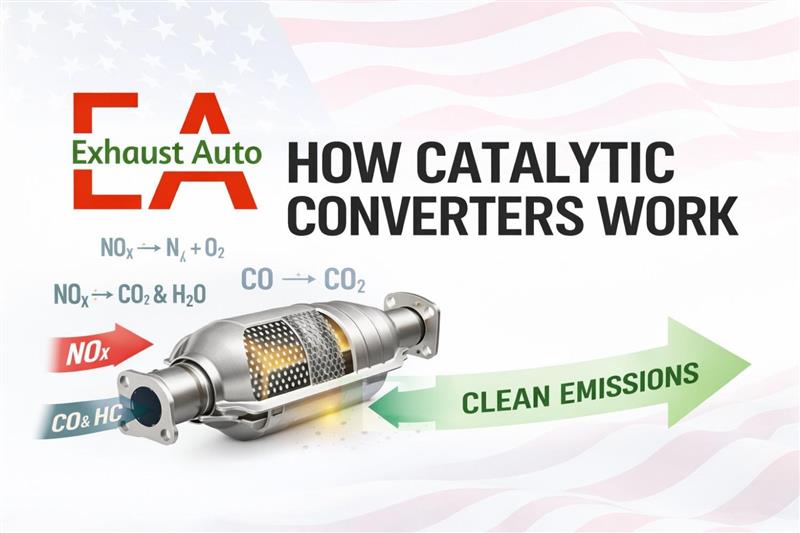
Catalytic converters play a critical role in keeping your vehicle legal, efficient, and environmentally responsible. While most drivers know that catalytic converters reduce emissions, very few understand how they actually work or why choosing the right one matters so much.
In this guide from ExhaustAuto, we break down how catalytic converters work, what happens inside them, and why they are essential for vehicles in the United States.
What Does a Catalytic Converter Do?
Every time your engine runs, it burns fuel and creates exhaust gases. These gases include harmful pollutants such as:
-
Carbon monoxide (CO)
-
Hydrocarbons (HC)
-
Nitrogen oxides (NOx)
If released directly into the air, these pollutants contribute to smog, health issues, and environmental damage.
A catalytic converter is designed to clean these gases before they exit the tailpipe, converting them into much safer substances.
Where Is the Catalytic Converter Located?
The catalytic converter sits in the exhaust system between the engine and the muffler. Its placement is intentional—close enough to the engine so it heats up quickly, but far enough to handle exhaust flow safely.
Modern vehicles are designed so the catalytic converter reaches operating temperature shortly after startup, which is critical for reducing emissions during cold starts.
What’s Inside a Catalytic Converter?
Although it looks like a simple metal can from the outside, the inside of a catalytic converter is highly engineered.
Inside, you’ll find:
-
A ceramic or metallic honeycomb structure
-
A coating called the washcoat
-
Precious metals such as platinum, palladium, and rhodium
The honeycomb design increases surface area, allowing exhaust gases to come into contact with the precious metals more efficiently.
These metals act as catalysts, meaning they trigger chemical reactions without being consumed themselves.
The Science Behind How Catalytic Converters Work
Catalytic converters work through chemical reactions, not filters. They don’t trap pollutants—they transform them.
There are two main types of reactions happening inside most modern catalytic converters.
1. Reduction Reaction (NOx Control)
Nitrogen oxides (NOx) are formed when fuel burns at high temperatures. These gases contribute heavily to smog and acid rain.
Inside the catalytic converter:
-
Rhodium breaks nitrogen oxides into harmless nitrogen (N₂) and oxygen (O₂)
-
These gases are then released safely into the atmosphere
This process is known as a reduction reaction, because oxygen is removed from NOx compounds.
2. Oxidation Reaction (CO and HC Control)
Next comes the oxidation stage, which targets carbon monoxide and hydrocarbons.
-
Platinum and palladium help convert carbon monoxide into carbon dioxide (CO₂)
-
Unburned hydrocarbons are converted into carbon dioxide and water vapor
While carbon dioxide is still a greenhouse gas, it is far less harmful than carbon monoxide and unburned fuel.
Why Heat Is So Important
Catalytic converters don’t work effectively when cold.
They need to reach temperatures between 400°F and 1,600°F to function properly. That’s why short trips, cold starts, or engine issues can reduce catalytic converter efficiency.
This is also why modern vehicles are designed to heat the catalytic converter as quickly as possible after startup.
What Is a Three-Way Catalytic Converter?
Most gasoline vehicles in the USA use a three-way catalytic converter.
It performs three functions at the same time:
-
Reduces nitrogen oxides (NOx)
-
Oxidizes carbon monoxide (CO)
-
Oxidizes hydrocarbons (HC)
This design allows one unit to handle multiple pollutants efficiently, which is why it’s the standard in modern vehicles.
How Oxygen Sensors Work with Catalytic Converters
Catalytic converters don’t work alone. They rely on oxygen sensors to function properly.
-
Upstream oxygen sensors measure oxygen levels before exhaust enters the converter
-
Downstream oxygen sensors measure emissions after the converter
Your vehicle’s computer compares these readings to adjust the air-fuel mixture and confirm the converter is working correctly.
If something goes wrong, your check engine light may turn on—often signaling catalytic converter inefficiency.
Why Catalytic Converters Fail
Catalytic converters are durable, but they don’t last forever. Common causes of failure include:
-
Engine misfires
-
Running too rich (excess fuel)
-
Oil or coolant leaks
-
Physical damage from road debris
-
Overheating
When raw fuel enters the converter, it can overheat and melt the internal honeycomb, leading to restricted exhaust flow and performance issues.
Signs of a Failing Catalytic Converter
Some common warning signs include:
-
Loss of engine power
-
Poor fuel efficiency
-
Rattling noises under the vehicle
-
Rotten egg or sulfur smell
-
Failed emissions test
Ignoring these signs can lead to bigger engine and exhaust problems over time.
Why Catalytic Converters Are Legally Required in the USA
In the United States, catalytic converters are required under federal law for gasoline-powered vehicles.
Depending on your state, you may need:
-
EPA (Federal) compliant converters
-
CARB compliant converters (for states like California and New York)
Installing the wrong type can result in failed inspections or fines—even if the vehicle runs well.
Choosing the Right Catalytic Converter Matters
Not all catalytic converters perform the same. Quality materials, proper precious metal loading, and correct fitment all affect how well a converter works and how long it lasts.
At ExhaustAuto.com, we focus on:
-
USA-compliant catalytic converters
-
Reliable performance and durability
-
Options for direct-fit and universal applications
We help customers choose converters that meet both emissions laws and real-world driving needs.
Final Thoughts
Catalytic converters are one of the most important parts of your vehicle’s emissions system. By using heat, precious metals, and smart engineering, they transform harmful exhaust gases into safer emissions every time you drive.
Understanding how catalytic converters work helps you:
-
Make better repair decisions
-
Avoid compliance issues
-
Protect engine performance
-
Reduce environmental impact
When it’s time to replace or upgrade your catalytic converter, trust ExhaustAuto for quality, compliance, and expert support.


